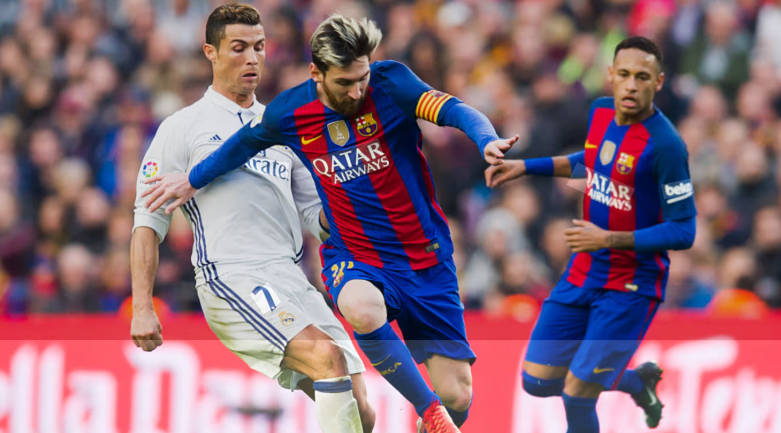
The rivalry between FC Barcelona and Real Madrid is not just about football matches, it is a story of passion, identity, and history that has evolved over decades. Known as El Clasico, this battle has delivered unforgettable moments, dramatic scorecards, and legendary performances. From early clashes to modern-day global spectacles, every encounter has added a new chapter to this intense rivalry. Fans across the world wait eagerly for these matches, where skill meets emotion and pressure defines greatness on the biggest stage in football.
Latest Matches Table
Date
Competition
Matchup
Score
11 Jan 2026
Supercopa
Barcelona vs Real Madrid
3–2
26 Oct 2025
La Liga
Real Madrid vs Barcelona
2–1
11 May 2025
La Liga
Barcelona vs Real Madrid
4–3
27 Apr 2025
Copa del Rey
Barcelona vs Real Madrid
3–2
12 Jan 2025
Supercopa
Real Madrid vs Barcelona
2–5
26 Oct 2024
La Liga
Real Madrid vs Barcelona
0–4
04 Aug 2024
Friendly
Barcelona vs Real Madrid
2–1
Head-to-Head Summary Table
Category
Real Madrid
FC Barcelona
Draws
Official Wins
106
105
52
La Liga Wins
80
76
35
Total Goals
447
436
—
League Goals
310
309
—
Exhibition Wins
6
24
12
Best Player Analysis Table
Feature
Robert Lewandowski (BAR)
Kylian Mbappé (RMA)
Main Role
Clinical Finisher
Explosive Forward
Key Skill
Positioning & Finishing
Pace & Dribbling
Impact
Veteran Leadership
Tactical Threat
Focus
Box Presence
Transition Attacks
Top Scorers All-Time Table
Player Name
Team
Goals Scored
Lionel Messi
FC Barcelona
26
Alfredo Di Stéfano
Real Madrid
18
Cristiano Ronaldo
Real Madrid
18
Karim Benzema
Real Madrid
16
Raúl González
Real Madrid
15
César Rodríguez
FC Barcelona
14
Paco Gento
Real Madrid
14
When Football Became More Than a Game in Spain
Football in Spain was never just about goals or trophies; it carried identity, politics, and deep cultural pride. When FC Barcelona faced Real Madrid, it symbolized more than a match. Barcelona stood as a voice of Catalan identity, while Madrid represented central authority. The tension was visible in every pass, every tackle, and every roar from the stands. Early encounters were charged with emotion, not just competition, and fans treated victories as statements of dominance. The atmosphere was electric, sometimes hostile, but always passionate. Players quickly realized that this rivalry demanded more than skill; it required mental strength and courage. Over time, El Clasico became a stage where history, pride, and football merged into one powerful narrative that extended far beyond the pitch and into the hearts of millions worldwide.
Aspect
FC Barcelona
Real Madrid
Impact
Outcome
Identity
Catalan pride
Spanish authority
Political tension
Emotional matches
Fan Base
Regional loyalty
Nationwide support
Massive following
Global reach
Style
Technical play
Direct dominance
Contrast styles
Tactical battles
Atmosphere
Passionate
Intense
High pressure
Fierce rivalry
The First Clashes That Lit the Rivalry
The earliest meetings between FC Barcelona and Real Madrid laid the foundation for what would become football’s greatest rivalry. Their first official encounters in domestic competitions were unpredictable, with both teams testing each other’s strengths. Scorecards from those early matches showed fluctuating dominance, as neither side was willing to back down. These games were raw, physical, and full of determination. Fans began to take sides passionately, and every result started carrying long-term significance. The rivalry was still forming, but sparks were already visible in aggressive challenges and heated moments. As victories were exchanged, a competitive fire grew stronger, setting the tone for decades of unforgettable clashes that would follow.
Match Phase
Barcelona Edge
Madrid Edge
Key Moment
Result Pattern
Early Games
Possession
Physical play
Tight contests
Mixed results
Fan Reaction
Growing support
Loyal backing
Crowd energy
Rivalry builds
Scorecards
Balanced goals
Defensive stands
Close finishes
No dominance
Intensity
Rising
Rising
Heated duels
Competitive
Di Stefano Era and the Shift in Power Dynamics
The arrival of Alfredo Di Stefano at Real Madrid changed everything. His influence was immediate and overwhelming, turning Madrid into a dominant force in both domestic and European competitions. Barcelona struggled to match this new level of consistency and attacking brilliance. Di Stefano’s ability to control matches, score crucial goals, and lead from the front tilted the balance of power. Scorecards during this period often reflected Madrid’s superiority, with commanding wins and clinical performances. The rivalry intensified as Barcelona sought ways to respond, but Madrid’s dominance created a psychological edge. This era marked the first major shift, proving how a single player could redefine the trajectory of an entire rivalry.
Factor
Barcelona
Real Madrid
Key Player
Result Impact
Squad Strength
Competitive
Dominant
Di Stefano
Madrid rise
Attack
Creative
Clinical
Goal scoring
High margins
Momentum
Inconsistent
Strong
Leadership
Winning streaks
Rivalry Tone
Challenging
Confident
Influence
Power shift
Cruyff’s Arrival and Barcelona’s Tactical Awakening
When Johan Cruyff joined FC Barcelona, the club underwent a tactical revolution. His philosophy focused on possession, movement, and intelligent positioning, which reshaped Barcelona’s identity. Suddenly, the rivalry was no longer just about physical battles but also about strategic brilliance. Barcelona began to dominate matches through control and creativity, challenging Madrid’s traditional approach. Scorecards started reflecting tighter contests, with Barcelona gaining confidence and consistency. Cruyff’s influence extended beyond results; he changed how the game was played, making Barcelona a symbol of attractive football. This shift added a new layer to the rivalry, where tactics became just as important as talent.
Element
Barcelona
Real Madrid
Tactical Edge
Match Outcome
Style
Possession play
Direct attack
Barcelona
Controlled games
Midfield
Dominant
Competitive
Creativity
Balanced results
Philosophy
Total football
Traditional
Strategic shift
New identity
Impact
Rising success
Strong response
Tactical duels
Close matches
El Clasico Goes Global with Television and Superstars
With the rise of television and global broadcasting, matches between FC Barcelona and Real Madrid reached audiences far beyond Spain. Superstars became global icons, and every Clasico turned into a worldwide spectacle. Fans from different continents tuned in to watch high-intensity clashes filled with drama and skill. Scorecards now carried global attention, with standout performances making headlines everywhere. The rivalry evolved into a commercial and cultural phenomenon, attracting sponsorships, media coverage, and massive fan engagement. Every goal, assist, and save was analyzed in detail, adding pressure on players to perform on the biggest stage.
Aspect
Barcelona
Real Madrid
Global Impact
Result
Popularity
Massive
Massive
Worldwide reach
Global rivalry
Players
Star talents
Star talents
Icon status
High expectations
Media
Extensive
Extensive
Coverage boom
Increased hype
Matches
Entertaining
Intense
Viewer growth
Iconic moments
The Galacticos vs Barcelona’s Identity Football
The Galacticos era under Florentino Perez saw Real Madrid assemble a team of superstars, focusing on individual brilliance and attacking power. In contrast, FC Barcelona emphasized teamwork, youth development, and a clear footballing philosophy. This clash of ideologies made every Clasico fascinating. Madrid relied on star power to deliver decisive moments, while Barcelona trusted collective play and tactical discipline. Scorecards during this era showed unpredictable outcomes, with both teams capable of dominating on their day. The rivalry reached new heights as fans debated which approach was superior, turning each match into a battle of philosophies as much as a contest for victory.
Factor
Barcelona
Real Madrid
Key Difference
Match Result
Approach
Team play
Star power
Philosophy clash
Unpredictable
Squad
Youth + system
Superstars
Balance vs glamour
Mixed wins
Strategy
Structured
Individual brilliance
Tactical contrast
High drama
Fan View
Identity pride
Star attraction
Debate grows
Iconic clashes
Conclusion
The journey of FC Barcelona vs Real Madrid shows how a football rivalry can grow into a global phenomenon. From tactical battles to superstar performances, every era has contributed something unique to El Clasico. Historic scorecards, iconic players, and unforgettable moments continue to shape its legacy. As new generations step onto the pitch, the intensity remains unchanged, proving that this rivalry is timeless. No matter the result, each match adds another powerful story, ensuring that El Clasico will always remain one of the greatest spectacles in sports history.